5-minute read - by Andrea Powers, April 26, 2023
In the past five years, the number of employees at ASML has more than doubled, from around 20,000 at the start of 2018 to more than 40,000 today. This incredible growth means that more space is needed for those employees to do their jobs – more office buildings, more logistics centers, more everything. This rapid expansion is supported by a wide range of sustainability goals, including sustainable construction practices, that will help balance our need to maximize capacity with our desire to minimize our impact on the community and the environment.
By conservative estimates, the construction industry is responsible for more than 30% of the world’s natural-resource extraction and a quarter of the solid waste generated.1 In fact, the built world is one of the biggest contributors to global emissions – according to the World Green Building Council, the construction and operation of buildings accounts for 36% of global energy use and 39% of energy-related CO2 emissions.2 Incorporating sustainability practices into building construction is an important way in which companies can reduce their environmental impact.
What is sustainable building?
The definition of a sustainable building is relatively simple: It’s a structure that has been built using principles and processes that are environmentally responsible and resource efficient. The construction takes into account the effects on the surrounding natural environment, as well as the social aspects of use and impact on the community. This environmental and social philosophy encourages a holistic approach that considers the entire life cycle of a building, from design and construction to operation and maintenance.
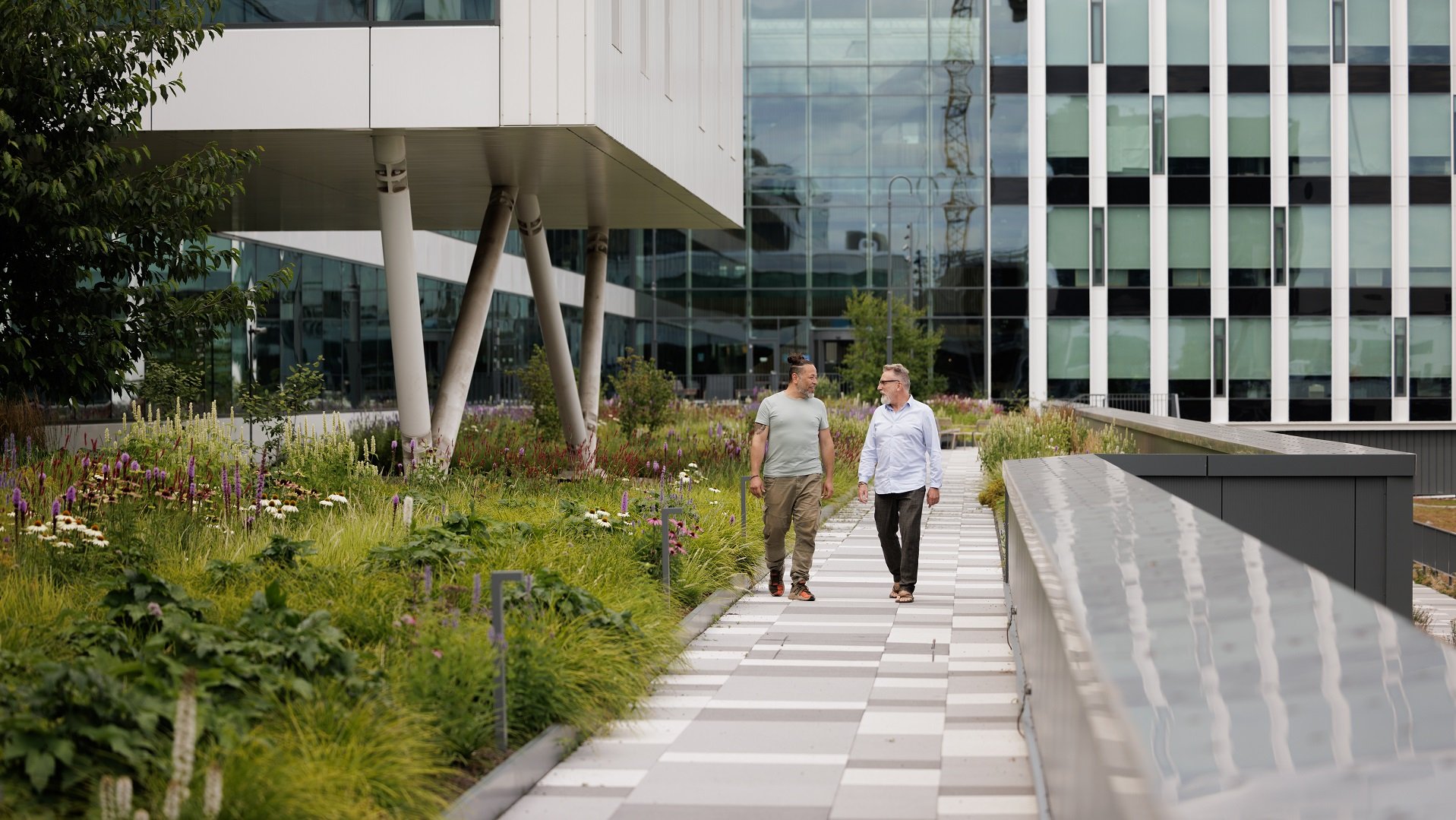
Green areas, such as roofs, can help promote biodiversity and improve employee well-being.
When it comes to the details of constructing a sustainable building, builders and designers use certification guidelines to help define what it means to be sustainable. There is currently no global framework, and different guidelines exist that can focus on specific building types or particular sustainability goals. They are, however, generally comparable and provide broadly accepted standards that go beyond conventional building requirements.
ASML has chosen two of the most popular green certification methods for new and existing office buildings and logistics centers. The Building Research Establishment Environmental Assessment Method (BREEAM), one of the leading certification methods in Europe, is used in the Netherlands. Projects in the US apply the Leadership in Energy and Environmental Design (LEED) framework. Our construction in other regions, such as Asia, follow both LEED and the Green Standard for Energy and Environmental Design (G-SEED).
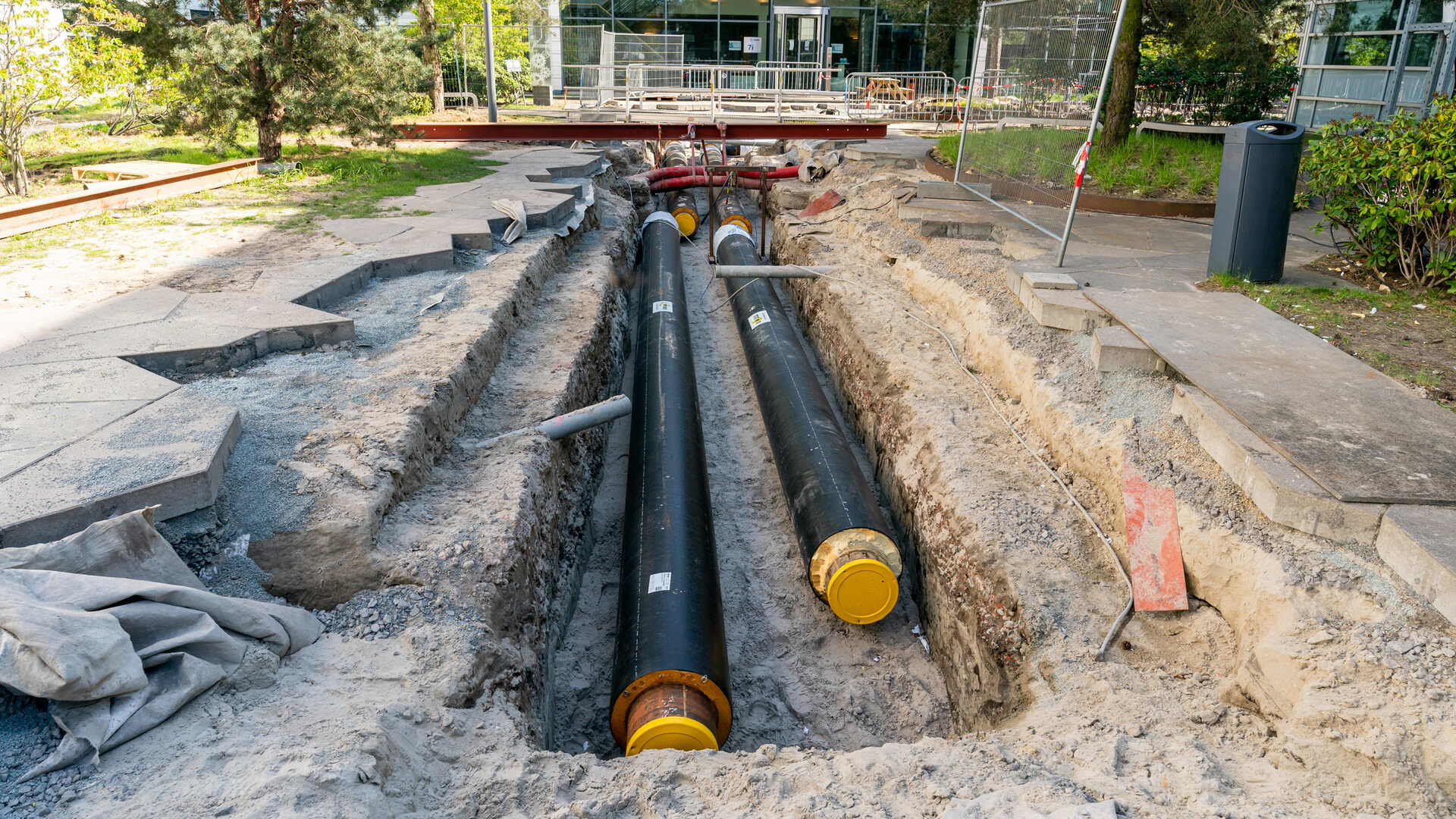
ASML’s campus energy grid includes a ring pipe system to circulate water between offices and factories.
Certification for manufacturing buildings poses different challenges than office buildings or logistics centers. A bespoke process has been initiated that will allow partial certification of the manufacturing buildings on our campus, specifically the heating and cooling systems. This certification will also be combined with multiple energy reduction projects. Today, there are more than 80 of these projects across ASML's industrial sites. These activities will allow for overall reduction of energy and increase the creation of renewable electricity onsite.
A BREEAM of light
ASML’s sustainability priorities are linked to the United Nations’ Sustainable Development Goals. These objectives are intended to improve both the human experience and howwe interact with the planet. Our current focus areas include climate and energy, creating a circular economy, investing in an innovative ecosystem, ensuring a responsible supply chain and supporting the well-being of our people.
The BREEAM certification standards that ASML is using for all new construction in the Netherlands evaluate buildings in nine sustainability categories: energy, waste, land use and ecology, water, materials, health and well-being, building management, transport and pollution. Once a building is completed, it’s rated and scored in each category, resulting in a final classification. ASML’s goal is to attain the level of ‘excellent’ for each new building – a classification that only 10% of properties worldwide are expected to reach.
Constructing a holistic framework
The design and construction of a sustainable building can take many forms. But the overarching approach that drives the plan is the life cycle of the structure. “It’s not simply one category we’re considering, like solely energy use or only waste production. We’re looking at the total picture of the building,” says Nicolas Lallemant, ASML’s Corporate Real Estate sustainability program manager.
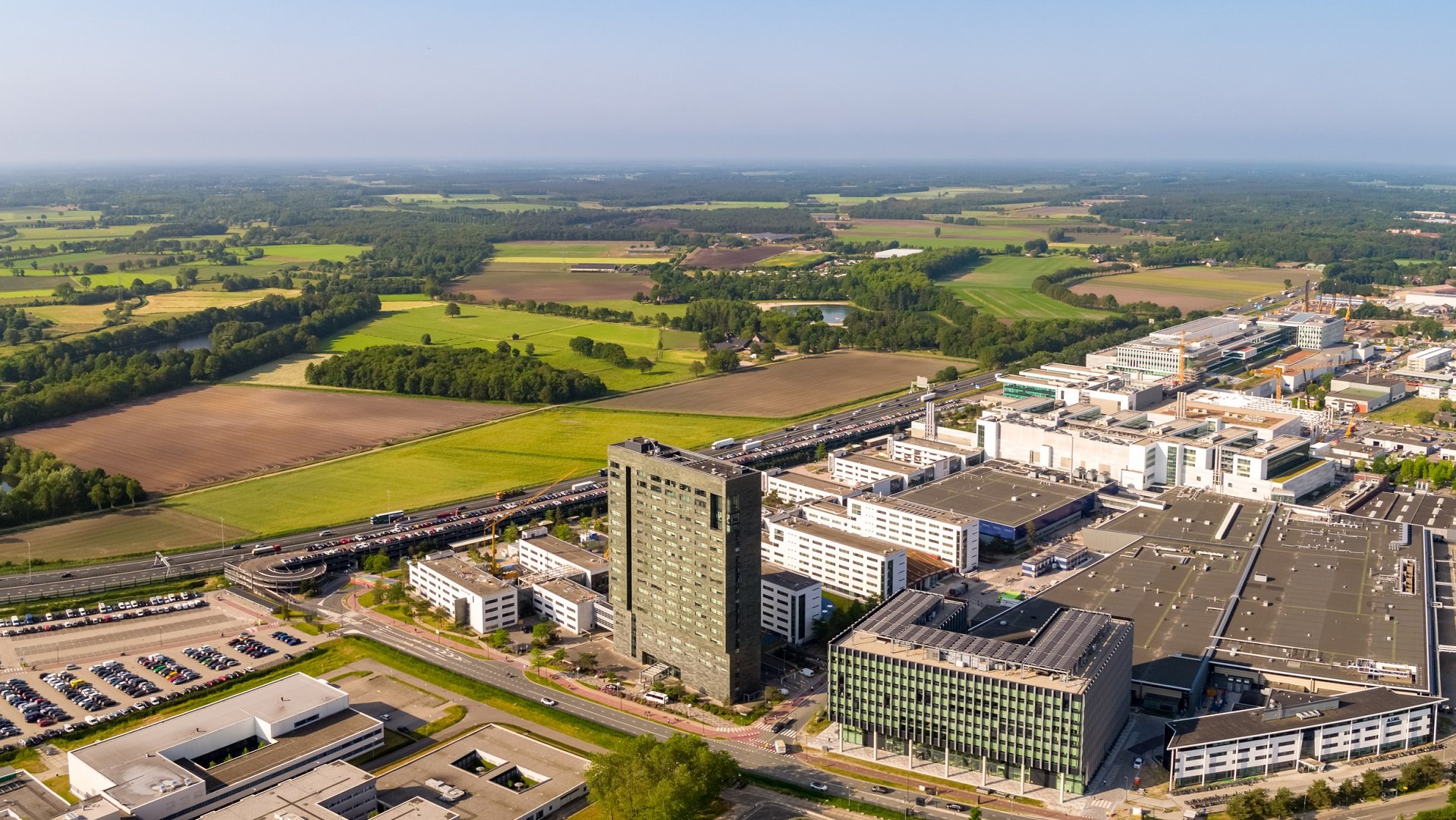
Our Veldhoven campus includes three buildings that have achieved BREEAM certification at the excellent level. Four more office buildings are currently being constructed and undergoing simultaneous evaluation. There are also plans to renovate one of the existing office buildings in order to achieve the excellent certification rating. The certified buildings include a mixture of innovative designs and more established sustainability techniques that contribute to the overall BREEAM rating.
One element of these designs is 11,830 m2 of so-called ‘green’ roofs and walls, some with insect and bird boxes. These features promote biodiversity, reduce the energy needed to cool buildings, allow for greater water retention to prevent overloading the public water system and contribute to the well-being of employees who can enjoy a stroll or a meal in these green areas.
Another sustainable feature is ASML’s campus energy grid. This system uses water to regulate heating and cooling in several buildings and on-site factories. Using a ring-pipe system, it takes residual heat from our on-site factories and moves it to office buildings to ensure a comfortable environment for our employees. Once the water cools off, it heads back to the factories where it’s used for cooling machine cabinets, utilities and cleanrooms.
The energy grid is scheduled to be completed by the end of 2023. Nicolas notes, “Once the grid is fully in use, it's estimated that annually we’ll save approximately 69 terajoules of energy and reduce emissions by about 3.9 kilotonnes of CO2. This is comparable to the average gas consumption of 1,760 households.” In fact, all new buildings will be fully electric to further reduce the company’s overall gas use.
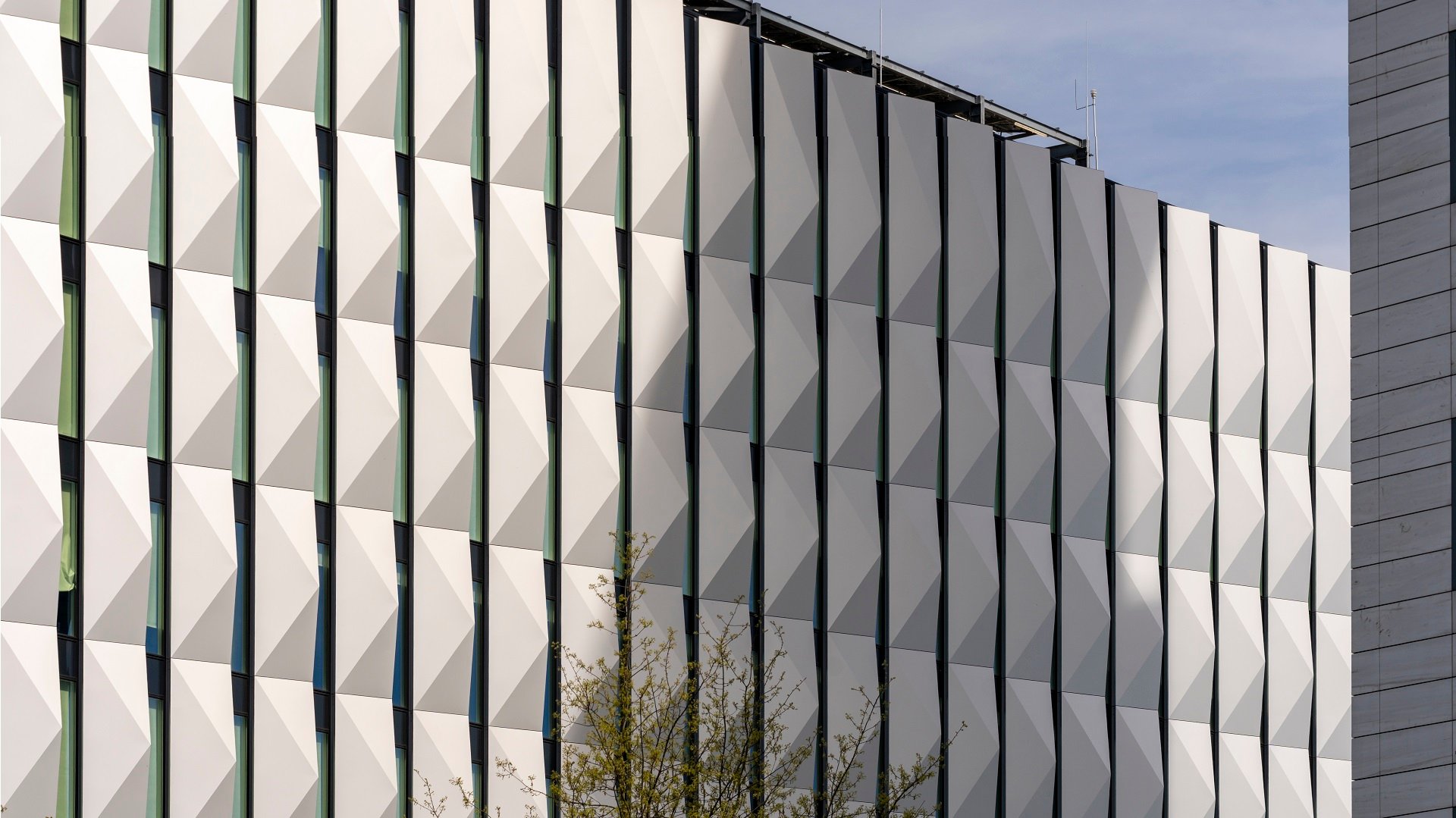
ASML has also incorporated unique architectural elements that help adjust lighting and temperature. The façade of one campus building uses specially designed ‘fins’ that help block sunlight to prevent unnecessary heating while still allowing for plentiful daylight. The fins employ parametric design, meaning that the shape of each façade orientation is based on how sunlight hits that specific area. The design therefore reduces energy costs while helping to create a better working environment.
The color of the future is green
Sustainability is an important factor for managing ASML’s continued growth and expansion in other regions across the globe. For our sites in Asia, we're currently designing new buildings – including office buildings in Taiwan and a training center in South Korea that combines office space and manufacturing training areas – using LEED and G-SEED certification guidelines. The training center is noteworthy because it’s an unusual type of mixed-use building that includes a manufacturing training area.
We’re also working on sustainability in the US at our campus in San Jose, California. Plans are underway for a new leased office building to undergo LEED certification, with the process starting later this year.
Our goal may be to lead in global sustainability, but we also want to ensure that our campuses serve our people. Nicolas concludes, “A green campus means that it’s more enjoyable to work in our buildings. It’s all part of making ASML a great place to work.”