4-minute read - June 12, 2026
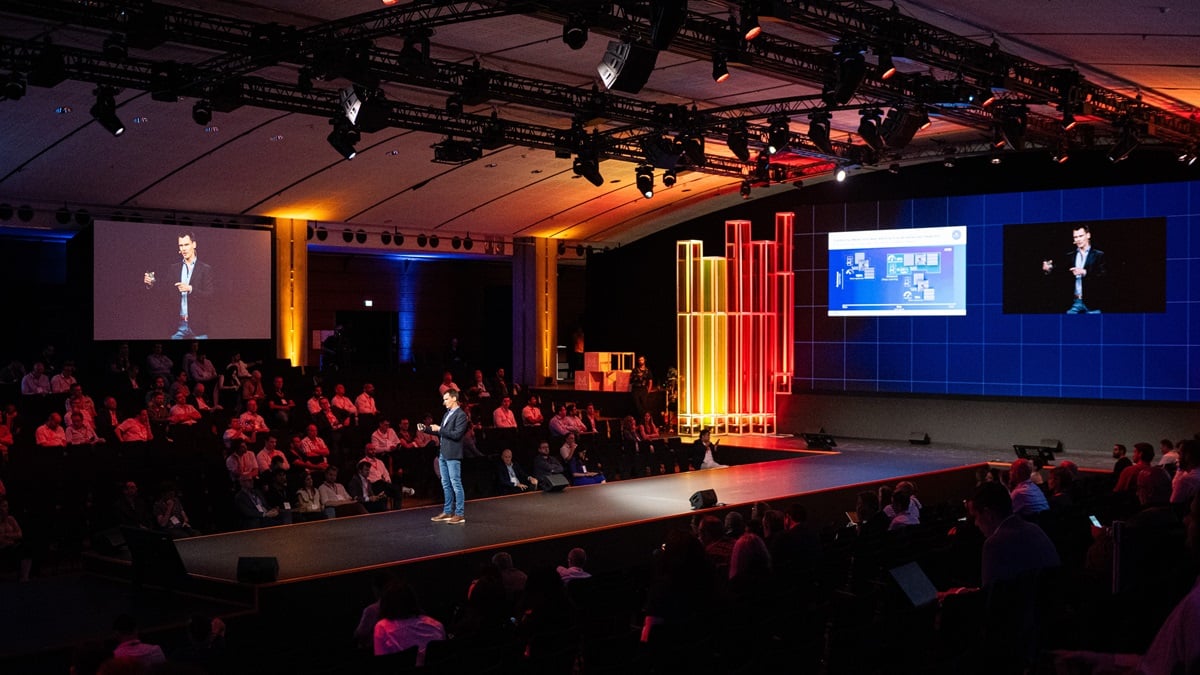
At the AI Now Summit in Paris, France, ASML joined a global conversation on the future of artificial intelligence – and our role in shaping it. The event brought together technology companies, startups and researchers to explore how AI is evolving, from models and software to infrastructure and engineering.
Table of contents
- AI Now Summit keynote recording
- What sits behind AI
- AI across the semiconductor life cycle
- Translating chip design into reality
- Controlling systems at the limits of physics
- Improving defect detection without slowing speed
- Diagnosing issues faster with AI
- Designing better systems faster
- Engineers and AI: a continuous loop
- Why this matters now
AI Now Summit keynote recording
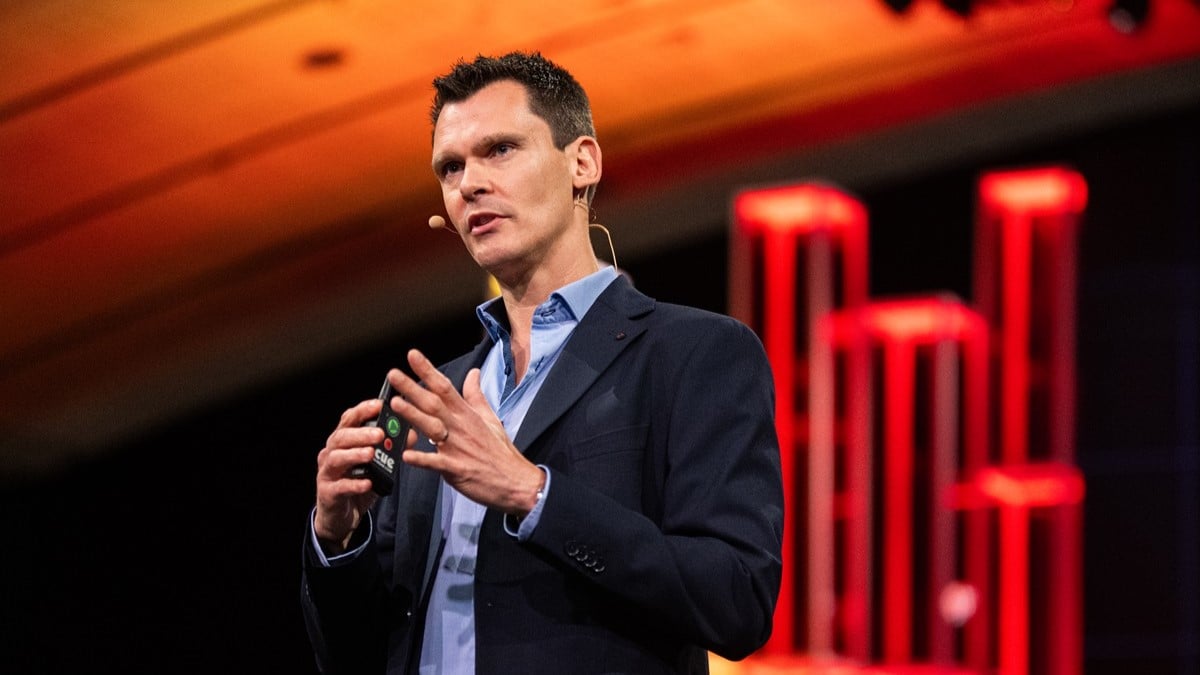
In a keynote, Arnaud Hubaux, Head of AI Program & Strategy, shared how ASML is applying AI across our products and operations to accelerate design cycles, improve system performance, enhance defect detection and reduce service time.
The event also reflects our growing collaboration with Mistral AI, a partner helping us apply advanced AI models and agents to complex engineering and operational challenges.
What sits behind AI
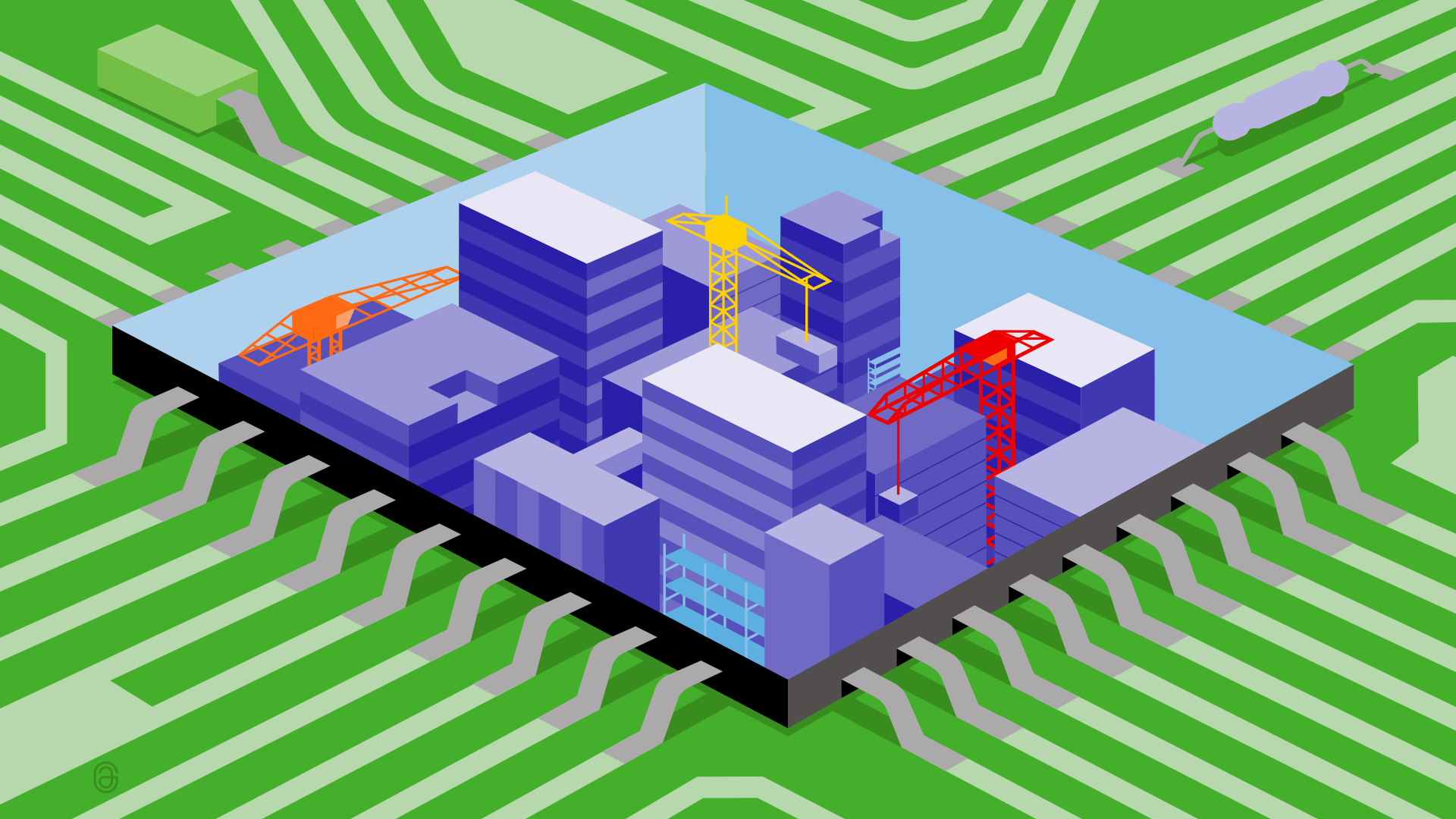
When people think about AI, they often see models, applications and user experiences. What remains largely unseen is the physical infrastructure that makes it possible.
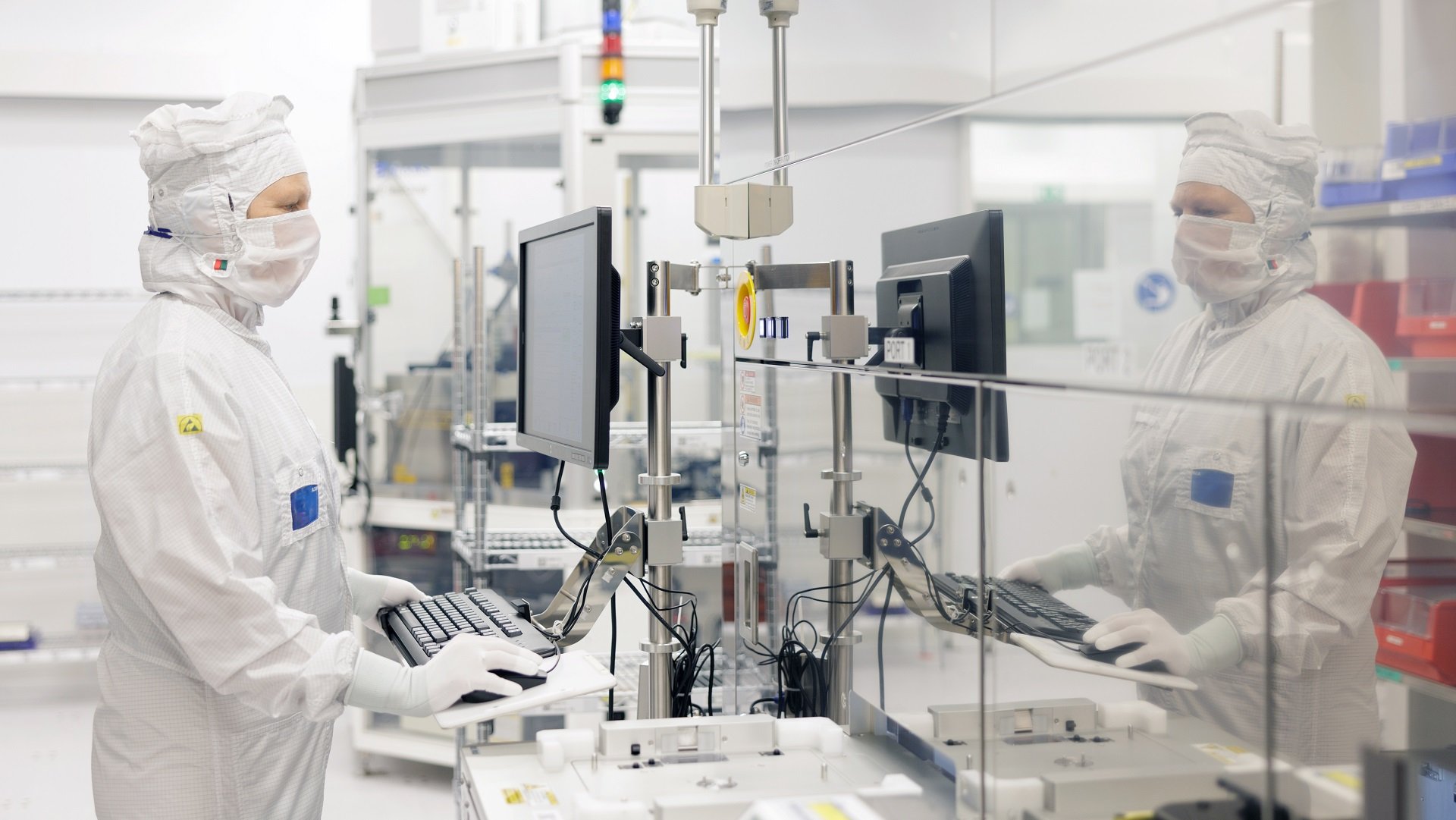
At the center of that infrastructure are AI chips – highly specialized microprocessors designed to handle the massive, parallel computations required for machine learning. As the leading supplier of holistic lithography solutions used to manufacture these chips, ASML plays a pivotal role in the AI revolution.
“Every time AI does something that feels unreal, it is not magic,” Arnaud said during his keynote. “It is matter. It is physics. It is human precision.”
AI across the semiconductor life cycle
ASML has been applying AI in targeted hardware and software solutions for more than a decade. Today, this approach is shifting. Instead of using AI as point solutions, we are integrating it across workflows and systems.
This shift allows us to apply AI consistently across the semiconductor life cycle – helping our teams accelerate the realization of new engineering innovation while improving the performance and reliability of our systems.
One way we’re enabling this transformation is through our partnership with Mistral AI. “Mistral AI’s expertise in models and agents complements our knowledge of physics, engineering and real-world system behavior,” says Arnaud.
Translating chip design into reality
Embedding AI across the semiconductor life cycle starts at the chip design phase. AI helps bridge the gap between intent and final result by improving the many steps required to make a chip design manufacturable.
The first step is optical proximity correction (OPC), which modifies the reticle design to meet imaging targets by compensating for distortions that occur during production. ASML has used AI in OPC for more than a decade to accelerate computation. Now, together with Mistral AI, we are improving recipe quality and accelerating time to solution. In January 2026, we completed early validation of our first generative AI capability with a customer.
Controlling systems at the limits of physics
Inside our machines, AI helps optimize and control highly complex physical processes.
Let’s start at the source – literally. ASML’s extreme ultraviolet (EUV) light source sits at the heart of the lithography system, turning the output of an extremely powerful laser into the EUV light needed to achieve the precision required by most advanced chips.
AI helps us to optimize and calibrate EUV source settings – reducing manual trial-and-error and enabling faster, more robust system initialization. Early tests have delivered increased wafer-level power gain in EUV scanners at a customer.

Improving defect detection without slowing speed
Being able to inspect what lithography machines print is critical to maintaining yield, but high-resolution analysis can limit throughput.
AI helps solve this trade-off. By enhancing image quality and guiding where and how to inspect, we are able to increase the throughput of our electron-beam (e-beam) metrology and inspection systems – while maintaining accuracy and reliability. This is another area where ASML and Mistral are working together.
Diagnosing issues faster with AI
In the field, system uptime is critical, but diagnosing issues in systems that generate terabytes of data is increasingly complex. AI helps process unstructured data such as error logs and service records to identify root causes more quickly.
In early pilots with Mistral AI, AI-driven diagnostics have identified certain sub-system errors more than 70% faster while matching engineers’ accuracy.
“Data only creates value if you can use it,” Arnaud says. “AI helps make that knowledge accessible across the organization.”
Designing better systems faster
AI is also helping us accelerate design cycles and improve components. It enables engineers to explore more design alternatives in high-dimensional problem spaces while accounting for real-world constraints such as cost and manufacturability. So far, more than 12,000 designs have been explored.
Engineers and AI: a continuous loop
“AI is there to augment our engineers, not replace them,” Arnaud says. “The future is expert teams amplified by intelligent systems.”
At ASML, engineering expertise remains the foundation. Engineers define problems, understand system behavior and validate outcomes in real-world conditions. AI accelerates this work. It helps teams iterate faster, handle more complexity and troubleshoot more effectively. Over time, this creates a continuous learning loop: engineers define and build, AI accelerates design and optimization, systems generate data, and that data improves the AI.
Why this matters now
AI demand is growing rapidly worldwide, putting increasing pressure on lithography systems to deliver higher performance while managing rising complexity. Traditional approaches alone are no longer sufficient. In this emerging environment, AI is becoming essential to scaling the next generation of semiconductor technology.
“ASML is positioned at the very beginning and very end of the AI cycle,” Arnaud concludes. “We’ve been enabling the AI industry with new chips that bring lower cost per token for decades. Now ASML is using AI to accelerate the engineering and delivery of the very systems that enable the AI evolution.”